Walk into any flooring showroom in Florida and you'll get the same pitch: "All our products are great for humidity!" That's marketing speak. The reality, after 300+ flooring installs across Tampa Bay, is that different products fail in different ways when humidity goes wrong — and choosing the right material for the right room can mean the difference between 5 years of service and 25.
This guide is the conversation we have with every client during our in-home consultations, written down. No sponsorships, no upsells — just what actually works in Florida and why.
How Florida Humidity Actually Damages Floors
Tampa Bay sits in a subtropical zone where outdoor relative humidity averages 73% annually, with peaks above 90% during summer afternoons. Indoor humidity (in air-conditioned homes) typically runs 45-55%. That 20-30 point swing creates four distinct failure modes for flooring:
- Dimensional movement. Wood-based products (hardwood, laminate) absorb moisture from the air and physically expand. When AC runs in summer, they release moisture and contract. Year-round, planks are constantly moving by fractions of a millimeter. Without proper installation gaps, this movement causes buckling, cupping, and edge crushing.
- Subfloor moisture migration. Concrete slabs in Florida are rarely truly dry. Moisture vapor migrates upward from the soil through the slab, especially in homes built before vapor-barrier requirements (pre-1990 typically). Floor coverings trap this moisture, leading to mold, adhesive failure, or warping.
- Adhesive degradation. Glue-down floors rely on adhesives that have moisture tolerance limits. Florida's humidity, combined with slab moisture, exceeds the limits of cheap adhesives. Quality adhesives (like Bostik or Mapei premium lines) are formulated for this — but cost 30-60% more than budget alternatives.
- Mold and odor. Trapped moisture under floors creates ideal conditions for mold growth. The first sign is usually a musty smell that won't go away no matter how often you clean. By the time you notice the smell, the damage is usually substantial.
Material Comparison: 4 Options Tested by Climate
| Factor | Hardwood | Vinyl Plank | Tile | Laminate |
|---|---|---|---|---|
| Waterproof? | No | Yes (100%) | Yes (100%) | No |
| Humidity tolerance | Moderate (engineered) / Low (solid) | Excellent | Excellent | Moderate |
| Lifespan in FL | 20-50 yr (with care) | 20-30 yr | 30-50+ yr | 10-20 yr |
| Cost / sq ft installed | $8.50-$22 | $4-$11 | $8-$25 | $3-$8 |
| Hurricane recovery | Poor (often total loss) | Excellent (clean & reuse) | Excellent (rarely damaged) | Poor (total loss) |
| Resale value impact | +75-90% ROI | +65-75% ROI | +70-85% ROI | +50-60% ROI |
Hardwood (Solid & Engineered)
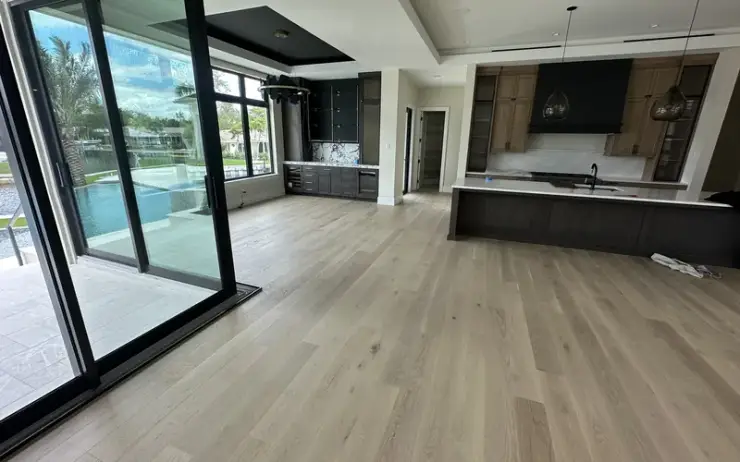
The aesthetic gold standard, but the most demanding to install correctly in Florida. Solid hardwood (3/4" thick) is rarely recommended for slab homes — it requires plywood underlayment and very careful moisture control. Engineered hardwood (multi-ply construction with hardwood veneer) is what we install 90% of the time for Florida homes. It's far more dimensionally stable in humidity swings.
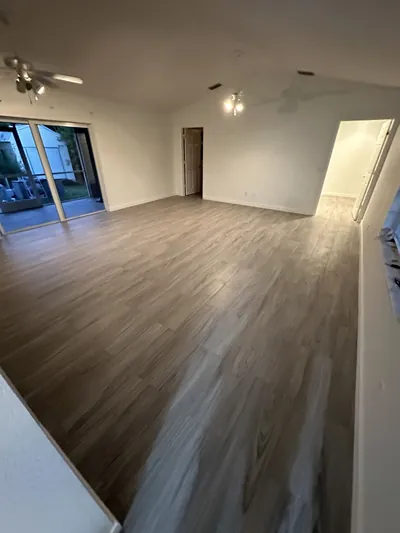
Even engineered hardwood, however, requires 48-72 hours of on-site acclimation, slab moisture testing, and proper expansion gaps at every wall. When installed correctly, engineered hardwood lasts 30+ years in Florida and adds the most resale value of any flooring type. When installed poorly, it fails within 18 months and becomes the most expensive flooring mistake you can make.
Luxury Vinyl Plank (LVP / SPC)
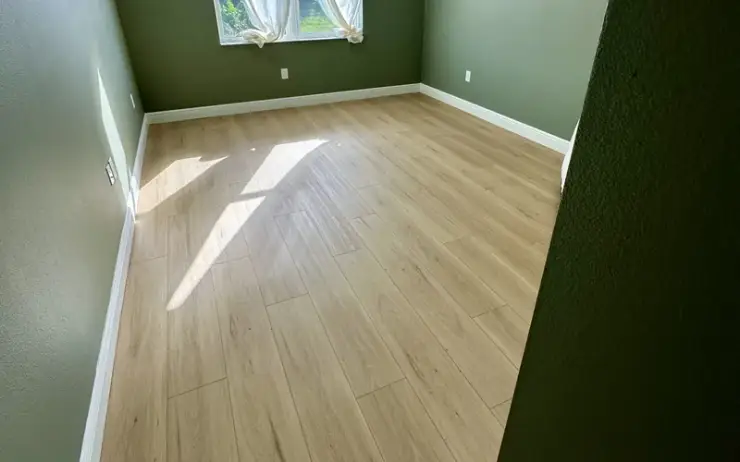
The MVP of Florida flooring. 100% waterproof, dimensionally stable across humidity swings, scratch-resistant, and increasingly indistinguishable from hardwood at distance. SPC (stone-plastic composite) variants are particularly good for Florida because the rigid mineral core resists temperature-driven dimensional changes that bother flexible LVP.
The trade-offs: doesn't last as long as hardwood (20-30 years vs 50+), can't be refinished, and lower resale impact than hardwood. But for the 90% of Florida homeowners who aren't planning to keep their home for 30+ years, LVP is usually the smarter financial choice.
Tile (Porcelain, Ceramic, Stone)
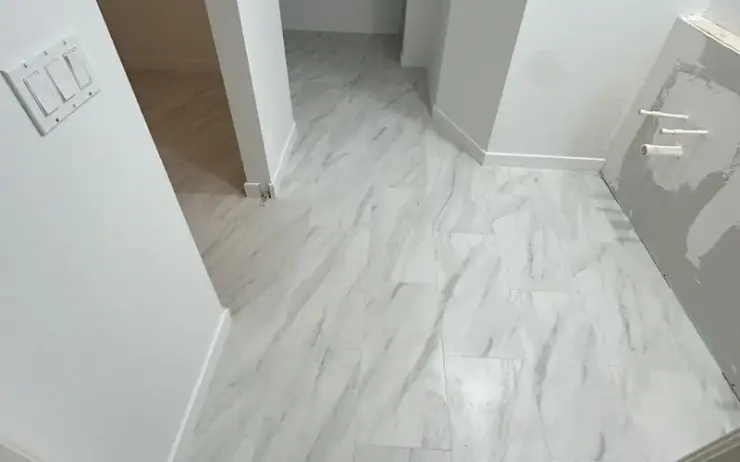
The longest-lasting flooring you can install in Florida — properly laid porcelain tile lasts 50+ years and survives anything short of demolition. Naturally cool underfoot (a benefit in Florida summers), 100% waterproof, and unaffected by humidity. The cost is high (especially for large-format porcelain that requires very flat substrates) and the installation is unforgiving — a poorly installed tile floor cracks at the grout lines within months.
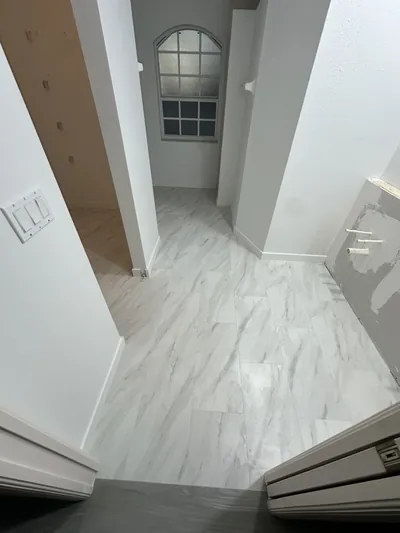
Tile is the only flooring we recommend without reservation for bathrooms, laundry rooms, and entryways in Florida. For other rooms, the cost premium and installation difficulty often push homeowners toward LVP instead.
Laminate
The budget option. Looks like wood, costs less, installs quickly. The catch: laminate is not waterproof. The high-density fiberboard core absorbs water and swells permanently. In Florida, where unexpected water events range from a leaking AC condensate line to a hurricane storm surge, this is a real risk. Newer "water-resistant" laminates handle small spills better but still aren't comparable to LVP for Florida's climate.
We install laminate when it's the right choice — typically in bedrooms, closets, and rental properties where cost matters and water risk is low. We don't install it in kitchens, bathrooms, laundry rooms, or any space with potential for water intrusion.
Room-by-Room Recommendations for Florida Homes
Living Room / Great Room
Best choice: Engineered hardwood (premium projects) or wide-plank SPC (most projects). Both handle humidity well, look great in open-concept Florida homes with lots of natural light, and stand up to daily family traffic. We typically use 7-9 inch wide planks here for visual impact.
Kitchen
Best choice: SPC vinyl plank (residential) or large-format porcelain tile (premium). Both are 100% waterproof, which matters when dishwashers leak or refrigerator lines burst. Hardwood in kitchens is risky in Florida — we've replaced 8 water-damaged hardwood kitchen floors in the past three years.
Bathrooms
Best choice: Porcelain tile, no exceptions. Even waterproof LVP has seams that can fail over decades in a bathroom environment. Porcelain tile, properly waterproofed with Schluter-Kerdi systems in showers, is the only flooring that genuinely lasts forever in a Florida bathroom.
Bedrooms
Best choice: Engineered hardwood, SPC, or quality laminate. Bedrooms are low water-risk, low traffic. The main considerations are comfort underfoot (laminate and LVP are warmer than tile) and quietness (LVP with attached padding is the quietest option for upstairs bedrooms).
Hallways / Stairs
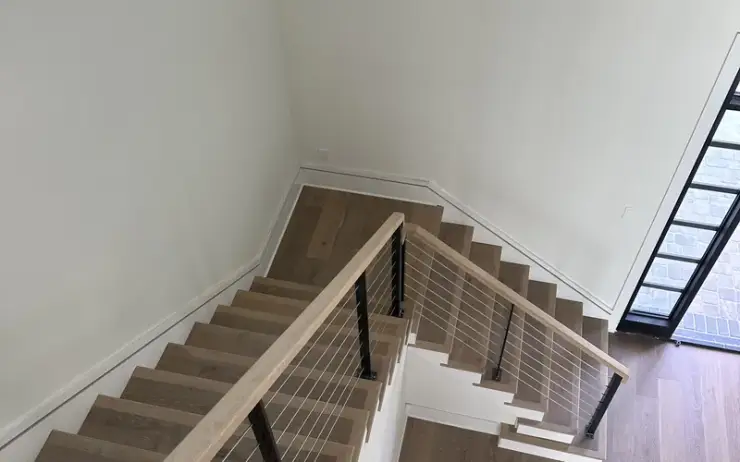
Best choice: Match your main living areas. Stairs benefit from solid hardwood treads (more impact-resistant than engineered or LVP-clad), but LVP-clad treads have come a long way and now look excellent in most homes.
Laundry Rooms
Best choice: Porcelain tile. Same reasoning as bathrooms — water risk is high (washing machine hose failures, leaks from supply lines), and tile is the only flooring that survives these events without damage.
Garages / Lanais
Best choice: Porcelain tile (climate-controlled spaces) or epoxy-coated concrete (true exterior). Standard interior flooring isn't designed for the temperature and humidity swings of an unconditioned garage or lanai.
We do free in-home consultations across Bradenton, Sarasota, Lakewood Ranch, and Tampa Bay. We'll assess your subfloor, discuss how you live in each space, and recommend the smartest material for each room.
Schedule a Free Consultation →Hurricane & Flood Considerations
Hurricane Ian (2022) and Helene (2024) were a brutal reality check for Florida flooring. We were called to inspect over 100 storm-damaged homes across Manatee and Sarasota counties. The patterns were stark:
- Hardwood: total loss in 95%+ of flooded homes. Even brief water exposure (4-8 hours) caused permanent cupping and required full replacement. Insurance claims for hardwood replacement averaged $14,000-$32,000 per home.
- Laminate: total loss in 100% of flooded homes. The HDF core swelled and never recovered. We didn't see a single laminate floor that survived flood exposure.
- LVP/SPC: salvageable in 70-80% of flooded homes. Standing water for under 48 hours typically didn't damage the planks themselves — only the subfloor and adhesives needed replacement. Many homeowners were able to clean, dry, and reinstall their existing LVP at significantly lower cost.
- Tile: salvageable in 85-90% of flooded homes. Floors themselves were almost always fine. The only failures were grout discoloration (in some cases) and isolated cracked tiles where furniture had floated and impacted the floor.
For homes in flood-prone areas (FEMA Flood Zones AE, VE, X), we strongly recommend tile or LVP/SPC over hardwood or laminate. The insurance and replacement math heavily favors waterproof materials.
Maintenance That Extends Florida Floor Life
- Keep indoor humidity 35-55%. A whole-house dehumidifier or properly sized AC system is critical. Floors fail faster in homes with unregulated humidity than in any other condition.
- Wipe spills within 30 minutes. Even on waterproof floors. Standing water finds seams.
- Use felt pads under furniture. Sand and salt tracked in from beach trips are abrasive — felt pads prevent micro-scratches that compound over years.
- Vacuum or sweep daily in entry areas. Florida sand is the #1 cause of finish wear on hardwood and LVP. A 30-second daily sweep prevents this.
- Use manufacturer-approved cleaners only. Vinegar, ammonia, and bleach can void warranties on most modern flooring products.
- Service AC/dehumidifier annually. A failing AC = uncontrolled indoor humidity = floor damage. The $200/year service cost prevents thousands in flooring damage.
Mistakes That Destroy Floors in Florida
- Skipping acclimation. Materials need 48-72 hours on-site to adjust to your home's climate before installation. We've seen $20,000 hardwood floors fail within a year because the contractor skipped this step to hit a schedule.
- Installing solid hardwood on slab. Almost guaranteed to cup or buckle in Florida. Either choose engineered hardwood, or install proper plywood underlayment first.
- Skipping subfloor moisture testing. A 30-minute test prevents 30-month problems. Always required, never optional.
- Trusting "moisture-resistant" laminate near water sources. Moisture-resistant ≠ waterproof. A leaky icemaker line will still destroy moisture-resistant laminate.
- Cleaning with vinegar or ammonia. Strips finish, voids warranties. Use what the manufacturer recommends.
- Closing up the house when leaving for summer. Indoor humidity skyrockets without AC. Even brief 2-week trips can damage hardwood. Always run AC at minimum 78°F when away.
Frequently Asked Questions
What's the most humidity-tolerant flooring for Florida?
Porcelain tile is the most humidity-tolerant flooring overall — completely unaffected by humidity changes. SPC vinyl plank is a close second and far more comfortable underfoot for living areas.
Can I install hardwood floors in a Florida slab home?
Yes, but only engineered hardwood (not solid). Engineered hardwood is built to handle the dimensional stress of Florida humidity. Solid hardwood requires plywood underlayment and is generally not worth the extra cost and complexity for slab homes.
How long does flooring last in Florida vs cooler climates?
When installed correctly, lifespan is comparable to cooler climates. When installed poorly, Florida's humidity accelerates failure significantly — a hardwood floor that might last 30 years up north could fail in 5-10 years in Florida if not properly acclimated and maintained.
Do I need a vapor barrier under my Florida floor?
For installations on concrete slab, almost always yes. The exception is engineered floors with built-in vapor barriers (some premium SPC products) where the manufacturer specifically excludes a separate barrier. Check your specific product's installation requirements.
Considering new flooring for your Florida home? Browse our hardwood services, vinyl plank options, or request a free in-home consultation. We'll measure your home, test your subfloor, and recommend the best material for each room — at no obligation.